Skip to content

Cutting Edge Safety Inc.

Breakthrough device to reduce surgical smoke inhalation at site of surgery

Occupational Health Risk

Developed by Professor of Surgery from the University of Chicago, addressing the safety concerns of surgeons inhaling toxic fumes from electro-cautery surgery.

Designed For Surgeons

AlleyKat® is designed for surgeons and addresses Occupational Safety and Health Administration (OSHA ) guidelines, currently in force in 18 States.

Patented “Air Drape"

AlleyKat® creates a unique patented “air drape” design to protect patient and surgeon, without obstructing field of view.

Surgical Smoke: A Preventable Risk

What is surgical smoke?

Every time electrocautery or laser devices are used, they generate a visible smoke plume. This plume is more than just an unpleasant odor — it carries ultrafine particles, toxic chemicals, and even viral DNA that can reach deep into the lungs.

What Does The Law Require

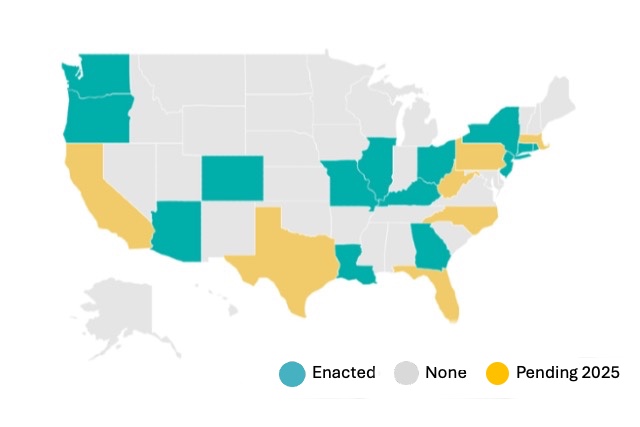
Starting in Rhode Island in 2018, legislation has spread quickly: 18 U.S. states now require smoke evacuation systems in hospitals and ambulatory surgery centers (AORN Legislative Tracker, 2025).

Designed By Surgeons
For The Whole OR Team

Headaches, sore throats, coughing, nausea, dizziness, and eye irritation are commonly reported when smoke evacuation is absent (NIOSH, 1996).

What Do The Experts Say

Authorities including NIOSH, OSHA, The Joint Commission, and AORN all agree:

Local smoke evacuation at the point of generation is the most effective protection. PPE is only a backup measure.


Why Does It Matter

A single day of exposure can equal inhaling up to 30 unfiltered cigarettes (Hill, 2012).

DNA from viruses like HPV and HBV has been detected in surgical smoke (Kwak, 2016; Neumann, 2018).

Gynecologic surgeons exposed daily are up to 9× more likely to test positive for HPV DNA in their nasal passages (Wang, 2021).

AlleyKat®: Protecting the Surgical Team

AlleyKat offers a seamless smoke evacuation solution.

Captures plume directly at the source.

Maintains a clear operative field.

Improves visibility safety, and comfort in the OR.

By adopting AlleyKat, hospitals not only meet regulatory requirements but also show a strong commitment to protecting clinicians and patients.

Product

AlleyKat®

Current products do not work well and have not satisfied surgeons for decades

After many years of perseverance, Dr. Millis developed an easy-to-use accessory, using positive and negative pressure air flow across the surgical field to remove harmful surgical fumes.

Our Solution Using AlleyKat®

Smoke is removed directly from the incision site, via a laminar air flow.  Surgeons have an uninterrupted field of view, hands can pass through the “air curtain”, fumes are vacuumed away from the surgical field.

.

Simple Plug and Play Set Up

Operating Room (OR) Nitrogen gas (N2) is piped through a sterile tube into the AlleyKat® purpose designed air flow management ring and then attached to standard OR vacuum device which removes smoke. The product is packaged as a kit with all sterile components.

Technical

The graphs depict a smoke simulation experiment. Using an invitro test apparatus, that included a Bovie electrocautery instrument and an Argon Beam Coagulator as a control, raw animal muscle tissue was subjected to a cautery procedure and a particle counter was positioned to measure the particulate count. Data was collected for 2.5 µm and 10.0 µm particle range.

The control apparatus was compared to the test subjects – the results demonstrate a virtual elimination of smoke while using AlleyKat®.


Bovie 2.5 Micron Particles

bovie 2.5 Micron Particles

Bovie 10 Micron Particles

bovie 10 micron Particles larger

Argon Beam 2.5 Micron Particles

AB 2.5 Micron Particles

Agron Beam 10 Micron Particles

Argon Bean 10 Micron Particles

Regulatory

The product will be filed as a Food and Drug Administration (FDA) Class II, 510k referencing a predicate smoke reduction device, a currently approved device category.

The pathway to approval is estimated to be less than 12 months upon securing the completion of our Seed Funding Round.

The product will be packaged as a sterile kit, containing the AlleyKat® air flow management ring (two per kit), inlet and outlet tubing and universal connectors.

US Capita

Market

map of smoke regulation lawa 2025Since the 1920’s, upon the invention of the Bovie electro-surgical knife, smoke emanating from a surgical field has been a health and safety issue. It is known that the smoke contains a combination of toxic chemicals and carcinogens – all of which can cause long term health complications.  Various solutions have been tried but all have failed because of their smoke clearance effectiveness and/or obscuring the surgical site e.g. Green Bovie – which incorporates a smoke evacuation tube at point of use.

AlleyKat® provides for an uninterrupted view of the surgical site and relies on creating an air curtain that acts a drape capturing all the smoke from the surgical cavity. The price point for AlleyKat® is on par with the Green Bovie, presenting a strong and compelling value proposition.

Over 50 million Bovies are used per year, and with the additional use of argon beam coagulators and electro-cautery ligature devices, the market for open in-surgery cases is estimated to be more than $2.0 billion.

The go-to-market assumption would be to focus on large centers of excellence of thoracic and abdominal surgery, progressively recruiting new sites, leveraging user sites as testimonials and references. 

Initial market research not only confirms a large unmet need, the current OSHA Respiratory Protection Standard (29 CHR 1910.134) what has been adopted by 18 states, further supports the Company’s market adoption assumptions.

Company

Dr. Michael Millis, Professor and Vice Chair of Global Surgery at the University of Chicago invented the AlleyKat® device, a unique surgical smoke mitigation device.  With the assistance of the University, a USA patent was filed, and following a successful founder’s investor round of funding, Cutting Edge Safety, Inc. was formed.

Board & Management

Phillip Croxford

Phil Croxford, M.B.A.

CEO, Board

Pharmacist, Medical Device CEO with >30 yrs experience with multimodalities, international and start-ups
J Michael Millis MD

J. Michael Millis, M.D

Chair. President, Founder, Inventor

Inventor with >30 yrs as Professor of Surgery: University of Chicago Extensive USA and International Surgical Network

Terry Winters, Ph.D.

Co-Founder, Board

Venture Capital >30 yrs experience. Ph.D. in chemistry – University of
Wales

Steve Kahn, B.S

RA/QA

>30 yrs experience in Quality Management, Operations and Regulatory Experience in Medical Devices

Investors

CES has secured a Seed Round of investment that will take the company to FDA approval within 12 months. Shortly, the Company will be raising additional funds as part of its Series A Round to support post approval commercialization.  Interested parties who would wish to participate in this round should contact the Company.

AlleyKat® has been awarded a USA patent and applications in other key markets have been filed.

The company’s technology was developed by Dr Millis at the University of Chicago and the company has secured an exclusive worldwide license for the relevant patents. 


×

Clinical and Occupational Safety

Surgical smoke is a well-recognized and preventable hazard in the operating room. Produced during electrocautery and laser procedures, the plume contains a mixture of ultrafine particles, toxic chemicals, and biological material (1–3). Measurements show bursts of more than 2.7 × 10^5 particles/cm³, with diameters as small as 9–80 nm—well within the range that penetrates deep into the lungs (1). Chemical analyses consistently identify formaldehyde, benzene, acrolein, and PAHs, substances already classified as irritants or carcinogens (2,3). Although concentrations may not always exceed short-term occupational limits, the reality of repeated daily exposure raises serious concern. In fact, one British study estimated that working a single day with electrosurgery can expose staff to the equivalent of inhaling 27–30 unfiltered cigarettes (4).

Smoke is also a biological risk. HBV DNA has been detected in plume from infected patients (5), and HPV DNA has been identified in up to 80% of LEEP plume samples (6). Gynecologic surgeons who frequently perform electrosurgical procedures are three to nine times more likely to have HPV DNA detected in their nasal passages compared with colleagues who do not (about 9–10% vs. 1–3%) (7). Case reports have even documented HPV-positive throat cancers in long-term exposed gynecologic surgeons (8), highlighting a credible pathway for viral transmission and oncogenesis. This elevated risk is likely related to the surgeon’s close proximity to the operative site and direct exposure to plume.

Importantly, operating room nurses and other staff are also exposed. Surveys and occupational studies describe increased rates of headaches, respiratory irritation, and chronic symptoms among perioperative nurses (9). Given that nurses often remain continuously in the operating room across multiple procedures, cumulative exposure is a serious occupational health issue.

For clinicians overall, the effects are also immediate. In the short term, operating room staff regularly report headaches, sore throats, coughing, nausea, dizziness, and eye irritation when exposed to smoke without evacuation (9,10). These symptoms, together with evidence of long-term risks, show that surgical smoke is a serious occupational hazard.

Recognizing these risks, NIOSH (1996), OSHA, The Joint Commission (2020), and AORN (2021) all converge on a single recommendation: local smoke evacuation at the point of generation is the most effective and necessary control measure, with PPE serving only as a secondary safeguard (11–13). Legislation has followed this consensus. Beginning with Rhode Island’s pioneering law in 2018, the movement has accelerated to 18 states by 2024 and 19 states by 2025 requiring smoke evacuation in hospitals and ambulatory surgery centers (14). What began as best practice is quickly becoming the standard of care.

The Role of AlleyKat

With clear evidence of chemical, biological, and clinical risks, and with new laws in place, reliable smoke evacuation is no longer optional. AlleyKat provides a practical solution by fitting seamlessly into surgical workflow, maintaining a clear operative field and safe environment without interfering with technique. Surgeons are free to use their preferred instruments, while plume is captured at the source. This protects clinicians in real time, removes carcinogens and viral particles, and improves visibility and comfort in the OR.

Hospitals that adopt AlleyKat not only comply with regulations and professional guidance but also demonstrate a strong commitment to the safety and well-being of their surgical teams.

Abbreviations Glossary